
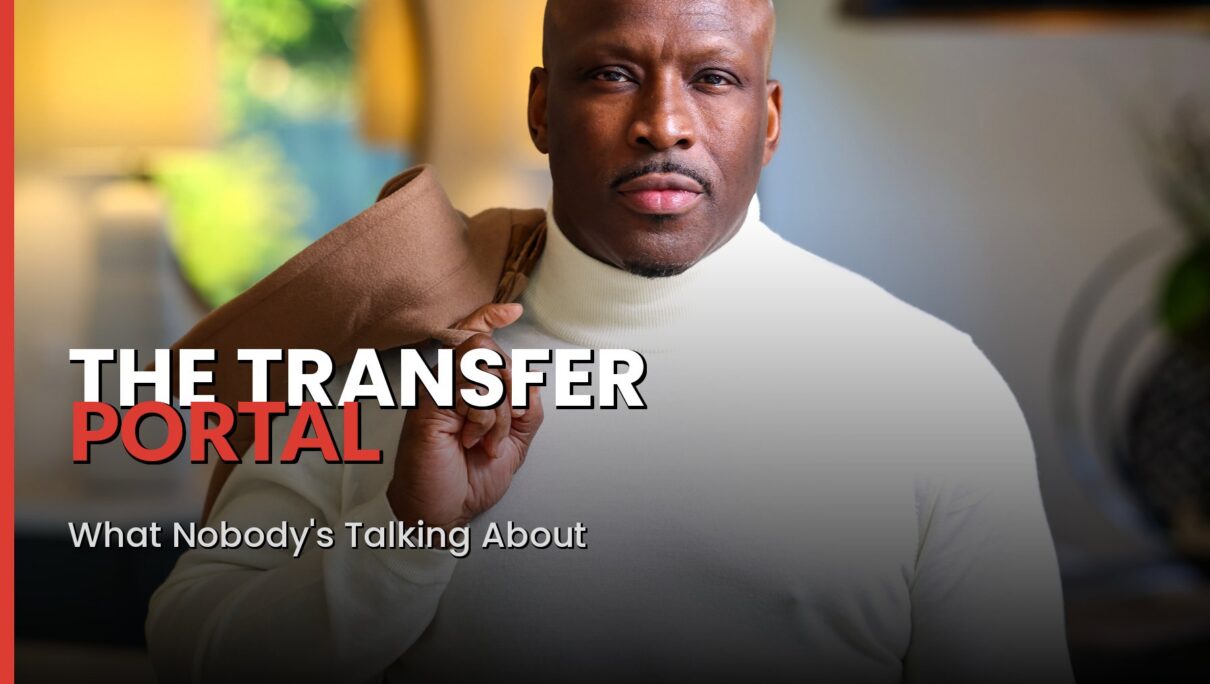
Let me be clear about something before I get into this: I am not anti-transfer portal. I believe in player freedom. I believe in opportunities. And as someone who played college football at the University of Washington, I understand — maybe more than most people sitting behind a keyboard — just how personal these decisions are for young athletes.
But I also believe we’re not having an honest conversation about what the transfer portal is actually doing to college sports. And somebody needs to say it.
The Promise vs. The Reality
The transfer portal was supposed to level the playing field. Give athletes who were stuck behind a starter a chance to go somewhere else and compete. Give kids who were unhappy — whether it was the coaching, the scheme, the culture — an exit ramp that didn’t come with penalties. And on paper, that’s a beautiful thing.
But here’s what’s actually happening: the portal has become a free agency marketplace for college athletes. And just like free agency in the NFL, the players with the most talent and the most buzz are the ones who benefit. The four-star recruit who didn’t get enough reps at Alabama? He’s got 30 schools calling him before he even hits the portal. The three-star kid from a mid-major program who’s been grinding for three years? He might get a call. Maybe. If he’s lucky.
That’s not leveling the playing field. That’s widening the gap.
What I Wish Someone Had Told Me
When I was at Washington, there was no portal. If you were unhappy, you had two options: stick it out or sit out a year. Was that perfect? No. But it forced you to do something that I think is becoming a lost art in college athletics — it forced you to FIGHT through adversity.
I learned more about myself during the tough times at UW than I ever did during the good times. The moments when I wasn’t getting the carries I thought I deserved. The practices where I felt like the coaches were overlooking me. The games where I was standing on the sideline watching someone else get the opportunity I wanted. Those moments shaped me. They taught me resilience. They taught me patience. They taught me that sometimes the best thing you can do is put your head down and outwork everybody around you.
I’m not saying the old way was better. But I AM saying that the ability to sit in discomfort — to push through when things aren’t going your way — is one of the most valuable skills a young person can develop. And I worry that the portal, for some athletes, is becoming an escape hatch instead of a strategic move.
The Conversation We Need to Have
Here’s what I think we need to start talking about honestly:
Not every transfer is a good transfer. I’ve seen kids enter the portal thinking the grass is greener somewhere else, only to find themselves in the exact same situation at a new school — just without the relationships and support system they’d built over the previous two or three years. A new jersey doesn’t fix old problems.
Coaches are adapting — and not always in good ways. Some programs have stopped developing players because they know they can just go “shopping” in the portal for a ready-made starter. Why spend three years developing a freshman when you can grab a junior who’s been playing somewhere else? That’s a real shift in how college football operates, and I don’t think we’ve fully reckoned with what it means for player development.
The mental health component is real. Moving to a new school, learning a new system, building new relationships, adjusting to a new city — that’s a LOT for a 19 or 20 year old kid to handle. And we’re asking them to do it in a matter of months, sometimes weeks, while also expecting them to perform at an elite level on the field. That’s a recipe for burnout if I’ve ever seen one.
What I’d Tell a Young Athlete Today
If you’re a college athlete reading this and you’re thinking about the portal, here’s my advice: Be honest with yourself about WHY you want to leave. Is it because the situation is genuinely not right for you? Or is it because things got hard and you’re looking for an easier path?
If it’s the former — if the coaching staff doesn’t have your best interests at heart, if the culture is toxic, if you’ve genuinely exhausted every option to make it work — then go. Transfer. Find your place. I support you 100 percent.
But if it’s the latter? Stay. Fight. Do the hard thing. Because on the other side of that fight, you’ll find something that no amount of portal shopping can give you: the unshakable confidence that comes from knowing you didn’t quit when it got tough.
That’s not just a football lesson. That’s a life lesson.